INDUCTION
CHARGING
(WIRELESS
CHARGING)

THE FUTURE OF MOBILE CHARGING ::::::::::::::::
Inductive charging (also known as wireless
charging or cordless charging) uses an electromagnetic field to
transfer energy between
two objects through electromagnetic
induction. This is usually done with a charging station. Energy
is sent through an inductive coupling to
an electrical device, which can then use that energy to charge batteries or
run the device.
Induction chargers use an induction coil to
create an alternating electromagnetic field from within a charging base, and a
second induction coil in the portable device takes power from the
electromagnetic field and converts it back into electric current to charge the
battery. The two induction coils in proximity combine to form an
electrical transformer. Greater
distances between sender and receiver coils can be achieved when the inductive
charging system uses resonant
inductive coupling.
Recent improvements to this resonant system include using a
movable transmission coil (i.e., mounted on an elevating platform or arm) and
the use of other materials for the receiver coil made of silver plated copper or
sometimes aluminium to minimize weight and decrease resistance due
to the skin effect.
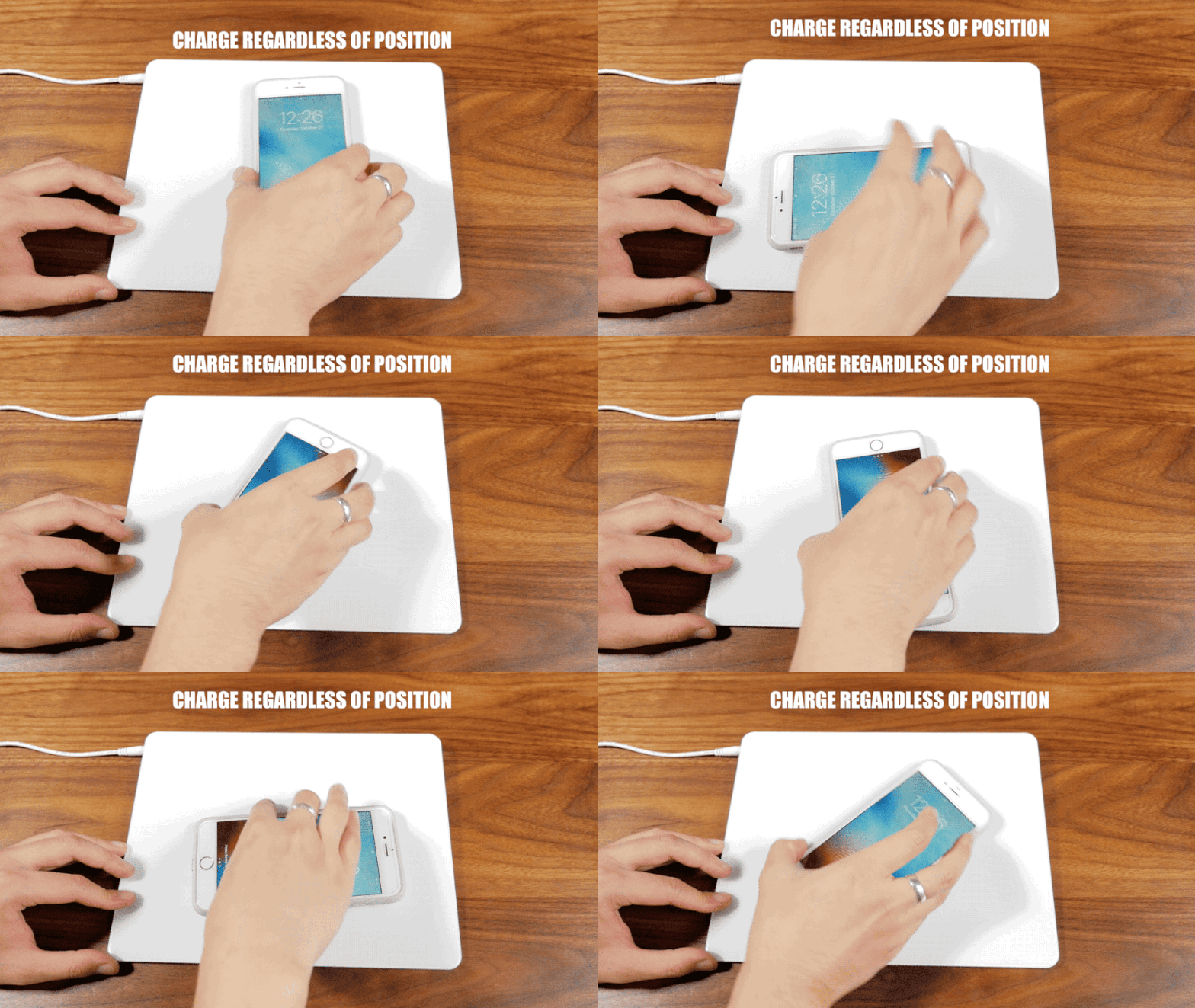
Advantages
·
Protected connections
– No corrosion when the electronics are enclosed, away
from water or oxygen in the atmosphere. Less risk of electrical faults such as
short circuit due to insulation failure, especially where connections are made
or broken frequently.
·
Low infection risk –
For embedded medical devices, transmission of power via a magnetic field
passing through the skin avoids the infection risks associated with wires
penetrating the skin.
·
Durability – Without
the need to constantly plug and unplug the device, there is significantly less
wear and tear on the socket of the device and the attaching cable.
·
Increased convenience
and aesthetic quality – No need for cables.
·
Automated high power
inductive charging of electric vehicles allows for more frequent charging
events and consequential driving range extension.
·
Inductive charging
systems can be operated automatically without dependence on people to plug and
unplug. This results in higher reliability.
·
Autonomous driving
technology, when applied to electric vehicles, depends on autonomous electric
charging. Automatic operation of inductive charging solves this problem,
allowing the vehicle to theoretically run indefinitely.
·
Inductive charging of
electric vehicles at high power levels enables charging of electric vehicles
while in motion (also known as dynamic charging).
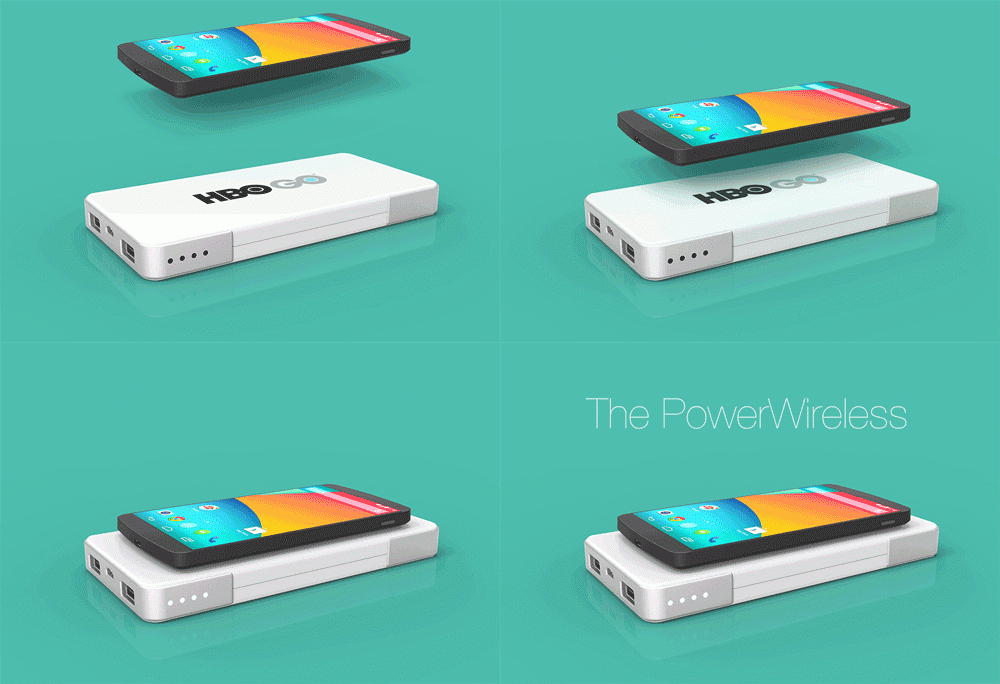
The following disadvantages have been noted for low power (i.e.,
less than 100 watts) inductive charging devices. These disadvantages may not be
applicable to high power (i.e. greater than 5 kilowatts) electric vehicle
inductive charging systems.
·
Slower charging – Due
to the lower efficiency, devices take 15 percent longer to charge when supplied
power is the same amount.
·
More expensive –
Inductive charging also requires drive electronics and coils in both device and
charger, increasing the complexity and cost of manufacturing.
·
Inconvenience – When a
mobile device is connected to a cable, it can be moved around (albeit in a
limited range) and operated while charging. In most implementations of
inductive charging, the mobile device must be left on a pad to charge, and thus
can't be moved around or easily operated while charging. With some standards,
charging can be maintained at a distance, but only with nothing present in
between the transmitter and receiver.
·
Compatible standards –
Not all devices are compatible with different inductive chargers. However, some
devices have started to support multiple standards.
·
Inefficiency –
Inductive charging is not as efficient as direct charging. In one application,
the phone being charged gets hot. Continued exposure to heat can result in
battery damage.
Newer approaches reduce transfer losses through the use of ultra
thin coils, higher frequencies, and optimized drive electronics. This results
in more efficient and compact chargers and receivers, facilitating their
integration into mobile devices or batteries with minimal changes required These technologies provide charging
times comparable to wired approaches, and they are rapidly finding their way
into mobile devices.
For example, the Magne Charge vehicle recharger system employs
high-frequency induction to deliver high power at an efficiency of 86%
(6.6 kW power delivery from a 7.68 kW power draw).


No comments:
Post a Comment